

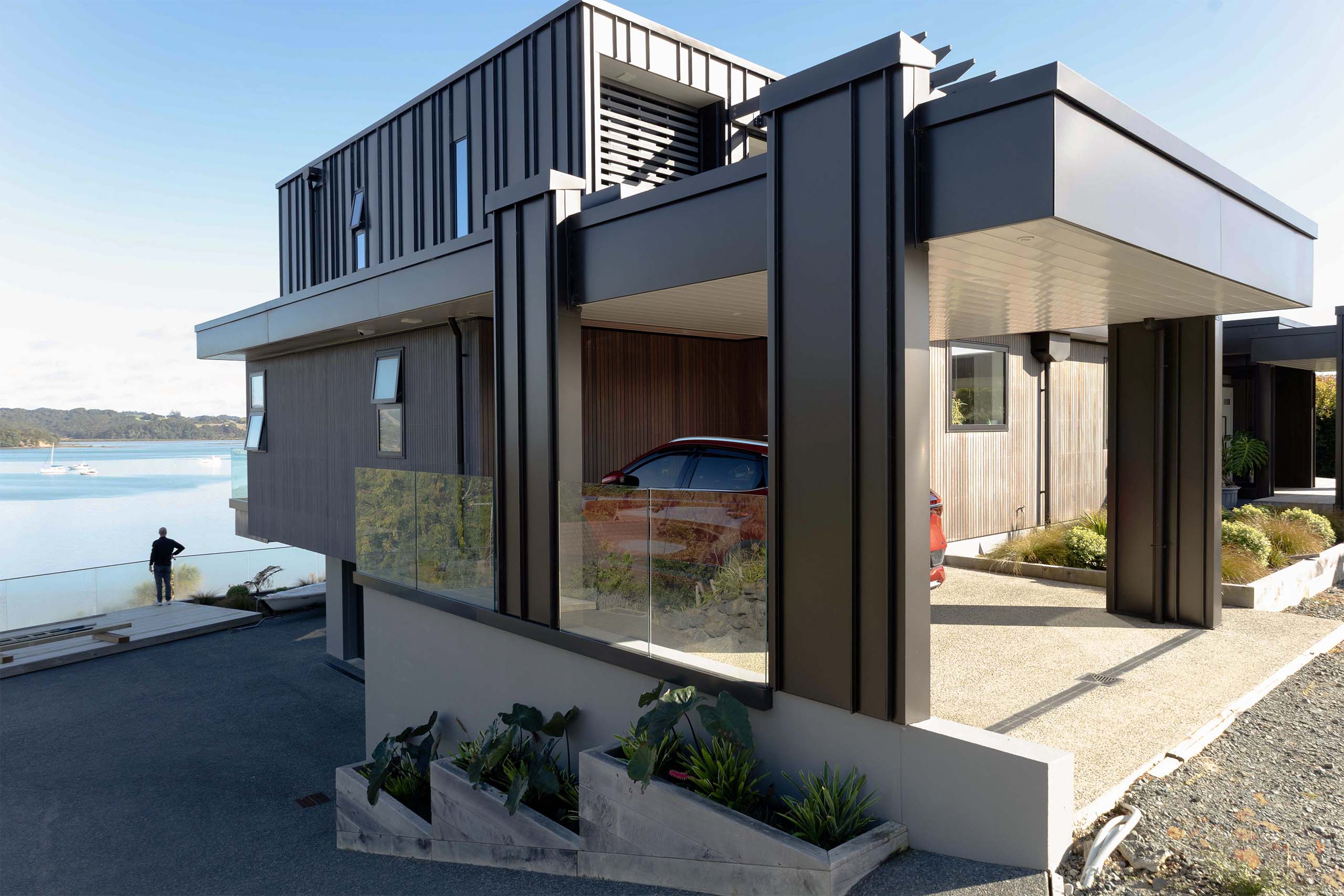

The beauty and purpose of soffits
Why is it that you and I enjoy looking at a beautiful view? Stranger still, how is it possible that the next person to gaze on that view will feel the same way we do? There’s something in us that is made to appreciate beauty, whether we’re looking at the wild glamour of an African leopard or the clean lines of a Ribon soffit.
When you’re looking at the underside of a roof overhang, the material that covers the eaves is the soffit. It’s not there just to look pretty, it’s busily protecting rafters from weather, keeping attics airy instead of stuffy and stopping draughts, making the building a lot more energy efficient.
The problem with traditional soffits
Putting in a traditional soffit is a bit of a fiddly business. Usually, by the time it’s done, quite a few different tradies would have left their mark on the installation, marching through in a line of builders, painters and roofers. The truth is, although traditional soffits look like an easy installation, they’re heavy and clunky, there’s tricky detailing to deal with, the fixings are visible (very annoying to a perfectionist), and maintenance is an ongoing headache. You can see how Ribon’s founder got fed up and started searching for a better way.
The Ribon innovation
What he came up with was ingenious. Developed right here in New Zealand and tested in full-on harsh conditions, he invented Ribon continuous interlocking soffits and patented the concept immediately. The system integrates soffit, fascia and even spouting (if you want to include it) into one clean, load-bearing unit.
The design makes the whole process easier, speeds up installation and delivers a clean, modern finish that makes architects extremely happy.
Key features of the Ribon system
Here’s how it works:
1. Interlocking panels
The Ribon system is made up of roll-formed, pre-painted (you choose the colour) steel panels. The panels are designed to interlock with each other, kind of like shiplap. So you end up with a continuous outer surface with no visible fixings. That means no screws or nails poking through the face—just clean lines and a beautiful aesthetic.
The way it interlocks also means it’s easy to install in a consistent and accurate way. Panels snap into place, human error is thrown out the window and there’s no more need for multiple tradies on site.

2. Clever bracketing system
The backbone of Ribon is its bracketing system that can attach to pretty much any structure, even steel, and hold the panels in place.
These brackets are stronger than your Uncle Murray and easily support the load of the soffit panels. The brackets hold everything in alignment and call the shots on spacing. This not only improves structural integrity but makes the whole installation process a lot simpler. The Ribon system can be suspended or fixed directly to the building.
3. No corrosion
One thing you won’t notice at first glance is the concealed fixings. Because, of course, they’re concealed.
Traditional soffits leave screws or nails exposed to the elements, which then become the first point of corrosion. Ribon eliminates all this by hiding fixings within the interlocking system.
It’s worth noting that the panels are made from Colorcote Magnaflow-coated steel, which incorporates zinc, aluminium and magnesium for a material that is super-corrosion-resistant, even if it’s going to a place built metres from the sea.
Built for New Zealand conditions
New Zealand’s climate can be tough—think high winds, salty air and sudden downpours. But Ribon soffits have been thoroughly scrutinised and given the thumbs up by BRANZ. They’re good to go in the most full-on wind pressures, making them suitable for even the most exposed sites.

They’re also non-combustible, which adds an extra layer of fire safety to your build. And because they’re pre-painted, there’s minimal maintenance required—just a rinse with water now and then to keep them looking fresh.
Ribon soffits come in a wide range of colours and profiles, so you can match them to your building’s design palette. The negative detail styling blends beautifully with a stately weatherboard house and looks just as stunning on contemporary builds. It’s versatile too. Ribon can be used for everything from eaves and ceilings to internal corridors and commercial canopies.
Installing a Ribon soffit is refreshingly straightforward, but if you’re into DIY, Ribon offers a network of trained and approved installers across Aotearoa, ensuring your project gets the professional touch it deserves.
Ribon soffits aren’t just a building product—they’re a design solution. By combining form and function into one elegant system, Ribon makes it easier to build beautiful, durable, and efficient structures. Whether you’re an architect chasing clean lines or a builder looking for a hassle-free installation, Ribon delivers.


