


Wood vs Fibre vs Steel
When you take three soffit building materials and compare them for ongoing maintenance; it quickly becomes clear, some require a lot more work than others. After all, there’s a reason Ribon spent years developing a more sophisticated system. Here’s why we think we’re better:
Which is greener?
Which is easier on the environment; A wooden soffit, fibre cement soffit or a powder-coated steel soffit? While durable, fibre cement manufacturing process is energy-intensive. Wood seems eco-friendly but it’s either pricy engineered timber or it’s depleting our forests of their natural timbers. The truth is steel is the most recyclable material on earth. It can be used, melted down and reused in an endless cycle without ever losing an ounce of structural integrity.
Which is more cost effective?
The initial cost of a fibre cement soffit is, admittedly, a bit less than the cost of a steel or timber one, but a Ribon soffit requires just one or two tradesmen to screw in the pre-measured system and it’s done; whereas a wooden or fibre soffit requires several trade visits, including a builder and a painter. It ends up costing about the same and taking longer.
Which is the easiest down the track?
Let’s talk maintenance. Wooden soffits are much needier than Ribon soffits and require quite a bit of ongoing care. Fibre cement is more durable, but it doesn’t look good for long. It quickly accumulates grime and mould and maintenance is expensive and awkward.

Maintaining a wooden soffit:
Wooden soffits need consistent, proactive upkeep every six months to protect them from moisture, rot and pests. Because timber is naturally vulnerable to decay, routine checks, cleaning and resealing are key to maintaining its typical lifespan of five (for pine) to twenty years. Anything longer would require extensive upkeep.
Maintenance schedule
- Visual checks (every 6 months):
Look over the soffit in both spring and autumn for any signs of sagging, warping, peeling paint or visible gaps. - Cleaning (annually):
Wash the surface gently with mild detergent and water to remove grime and mould. Avoid high pressure washing, as it can drive moisture into joints and speed up rot. - Repainting or resealing (every 3–5 years):
Refresh the finish with a high quality exterior paint or sealant to shield the timber from UV exposure and moisture. - Gutter care (weekly):
Keep gutters clear and properly aligned so they don’t overflow and saturate the timber, which can quickly damage the soffit. - Ventilation checks:
Ensure all soffit vents remain unobstructed to maintain airflow and prevent moisture build-up, mould growth and wood deterioration.
Repairing & protecting wood against damage
- Treating early decay:
Remove peeling paint with light sanding and use wood filler or sealant to repair small cracks or holes. - Preventing insect issues:
Seal any gaps to keep insects—such as ants or wasps—from nesting in the timber. - Managing nearby vegetation:
Trim trees and shrubs around the roofline to prevent trapped moisture that can contribute to rot.
Maintaining a fibre cement soffit:
While fibre cement soffits require less frequent attention than wood, routine inspections and periodic cleaning will help preserve their appearance and structural integrity. It’s important to maintain fibre cement soffits on higher levels, as they are weighty and troublesome to replace.

Maintenance schedule
- Visual checks (twice yearly):
Inspect the soffit every six months or so for any cracks, loose fixings, delamination, or signs of impact damage. Pay attention to joints and edges where moisture exposure is highest. - Cleaning (annually):
Wash with mild detergent and water to remove dirt, mould or mildew. Use a soft brush or cloth—avoid abrasive tools or high-pressure washing, which can damage the coating or force water into joints. - Repainting (every 3-5 years)
If the factory finish begins to fade or wear, apply a high-quality exterior paint suitable for fibre cement. Recoating helps maintain UV resistance and overall appearance. - Gutter care (monthly):
Ensure gutters and downpipes stay clear and aligned so water doesn’t spill onto the soffit. While fibre cement is moisture-resistant, constant water flow can still cause staining or premature coating wear. - Ventilation checks:
Confirm all soffit vents remain unblocked. Good airflow helps prevent moisture accumulation in the roof cavity and supports the building’s overall ventilation system.

Protecting fibre cement against damage
- Addressing cracks or chips:
Surface cracks or edge chips can be filled with a fibre cement compatible filler and repainted. Prompt repairs prevent moisture from entering the material. - Preventing pest access:
Although insects cannot damage fibre cement, they may enter through gaps around soffit edges or vents. Seal openings to maintain a tight building envelope. - Managing surrounding vegetation:
Trim trees and shrubs near the roofline to prevent abrasion, staining or trapped moisture around the soffit surfaces.
Maintaining a Ribon soffit:
If it ever looks a bit dusty, give it a squirt with a hose.

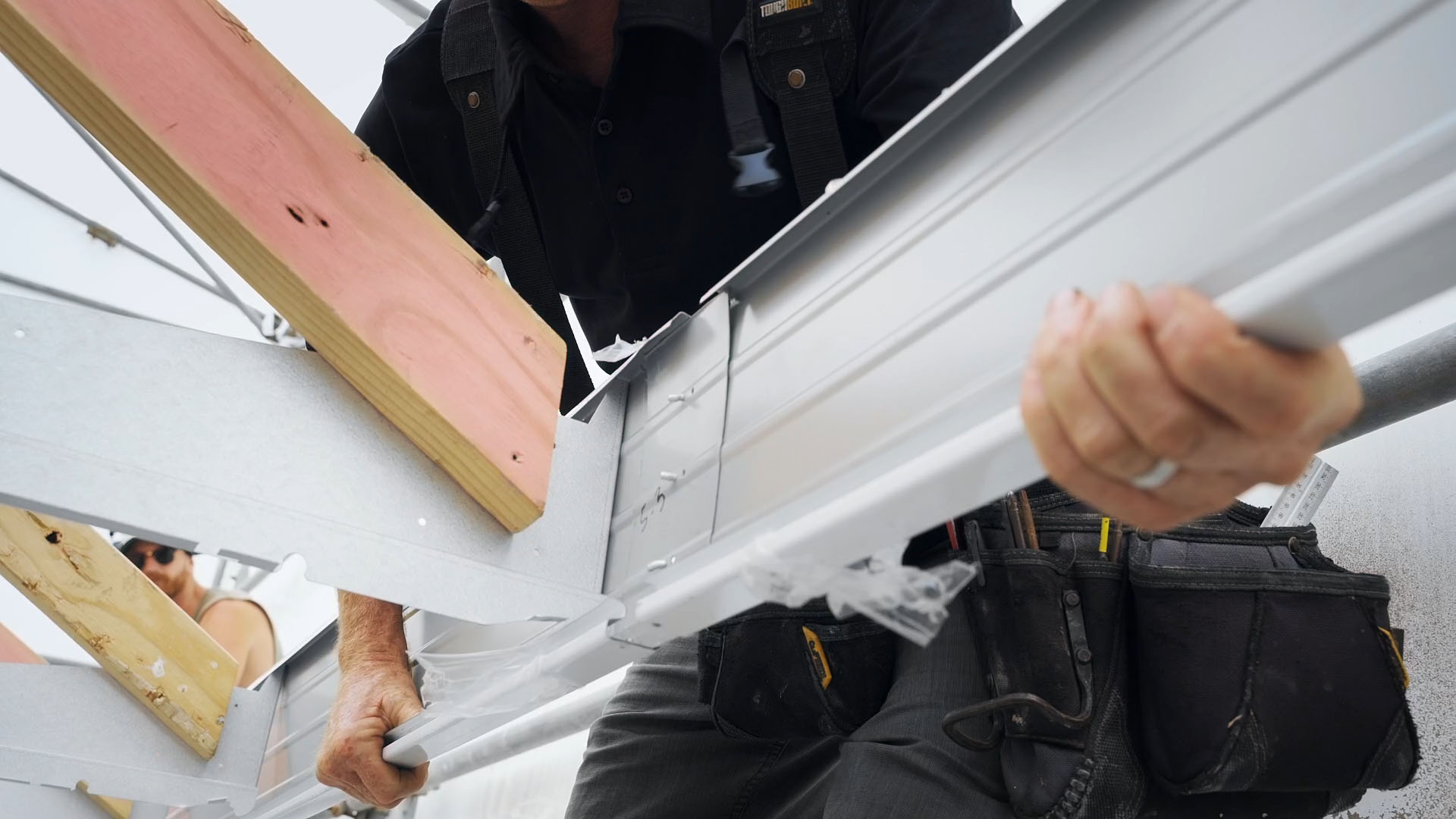
Ribon Continuous Interlocking Soffits® is an integrated metal soffit and fascia system for residential and commercial buildings. Ribon’s roll-formed, pre-painted steel soffit panels interlock into a bracketing and framing system, that’s attractive, light, durable and easy to install.
All Ribon soffits come with a 15-year warranty.


