


Project Name: Nadzab International Airport
Project Location: Nadzab, Papua New Guinea
Architect: Azusa Sekkei Co, Japan
Contractor/Client: Fletcher Morobe
Product/s: Ribon suspended soffit system
Soffit Colour/s: Off White, Titania, Maple
Quantity m2: 3000m2
From rustic terminal to international gateway
Prior to 2023, passengers arriving at Papua New Guinea’s Nadzab airport disembarked into a space that more closely resembled a rural basketball court than an international airport. It’s hard to believe today’s terminal is on the same space.
Situated near Lae, PNG’s second-largest city, Nadzab airport’s passenger numbers had risen to capacity and the government recognised the need for an upgrade to bring the facilities up to international standard. Due to the urgency of the build, the PNG government asked for a helping hand from the Japanese government who are famous for moving efficiently under pressure.
A design inspired by national identity
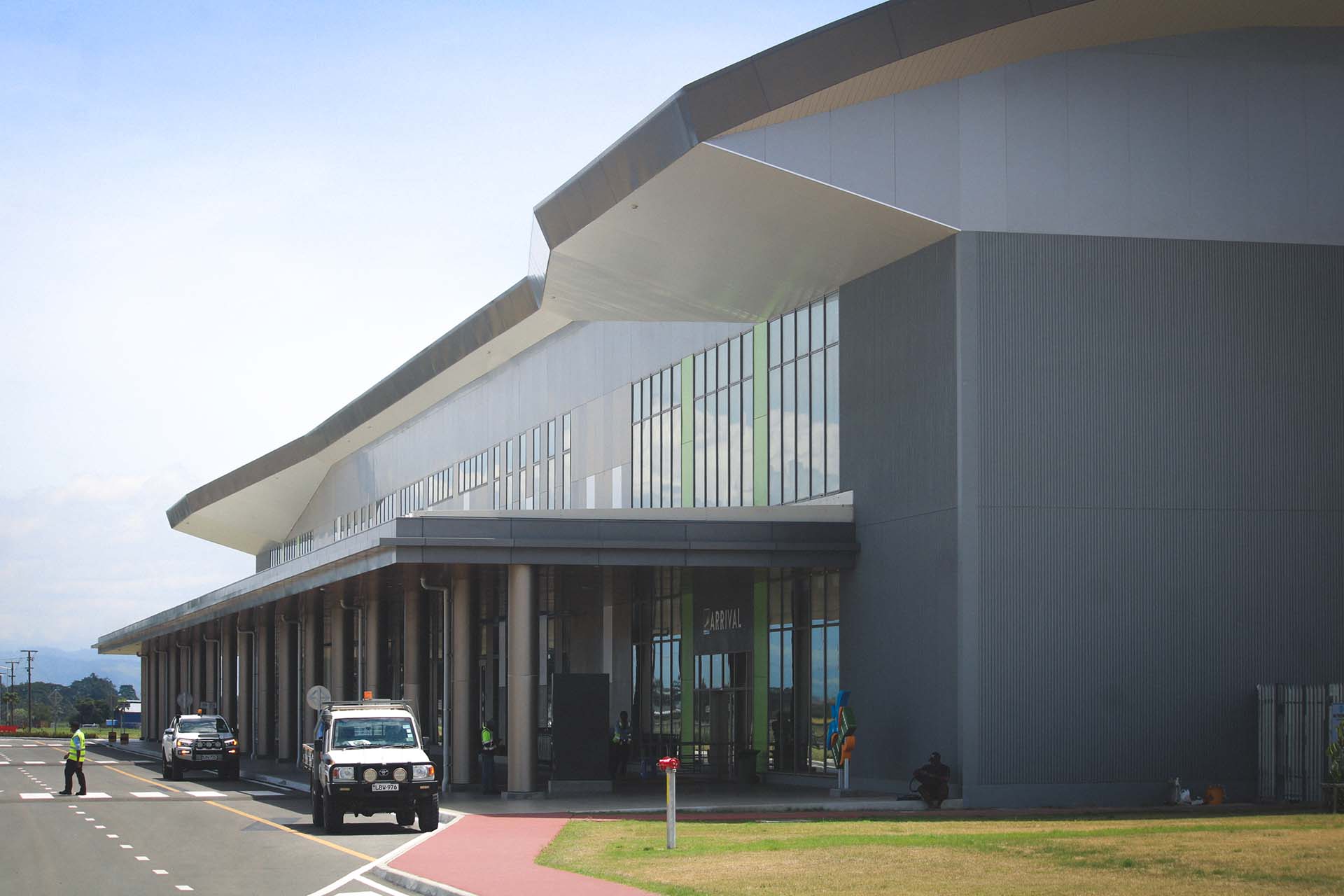
The Japanese architects soon laid down a design for the terminal in the shape of a traditional kundu drum. On Papua New Guinea’s national emblem, the kundu drum is depicted under the image of a bird-of-paradise with outstretched wings. The idea is, that as each aircraft comes in to land, it represents the bird poised over the drum; completing a picture of the national emblem.

Turning symbolism into architectural reality
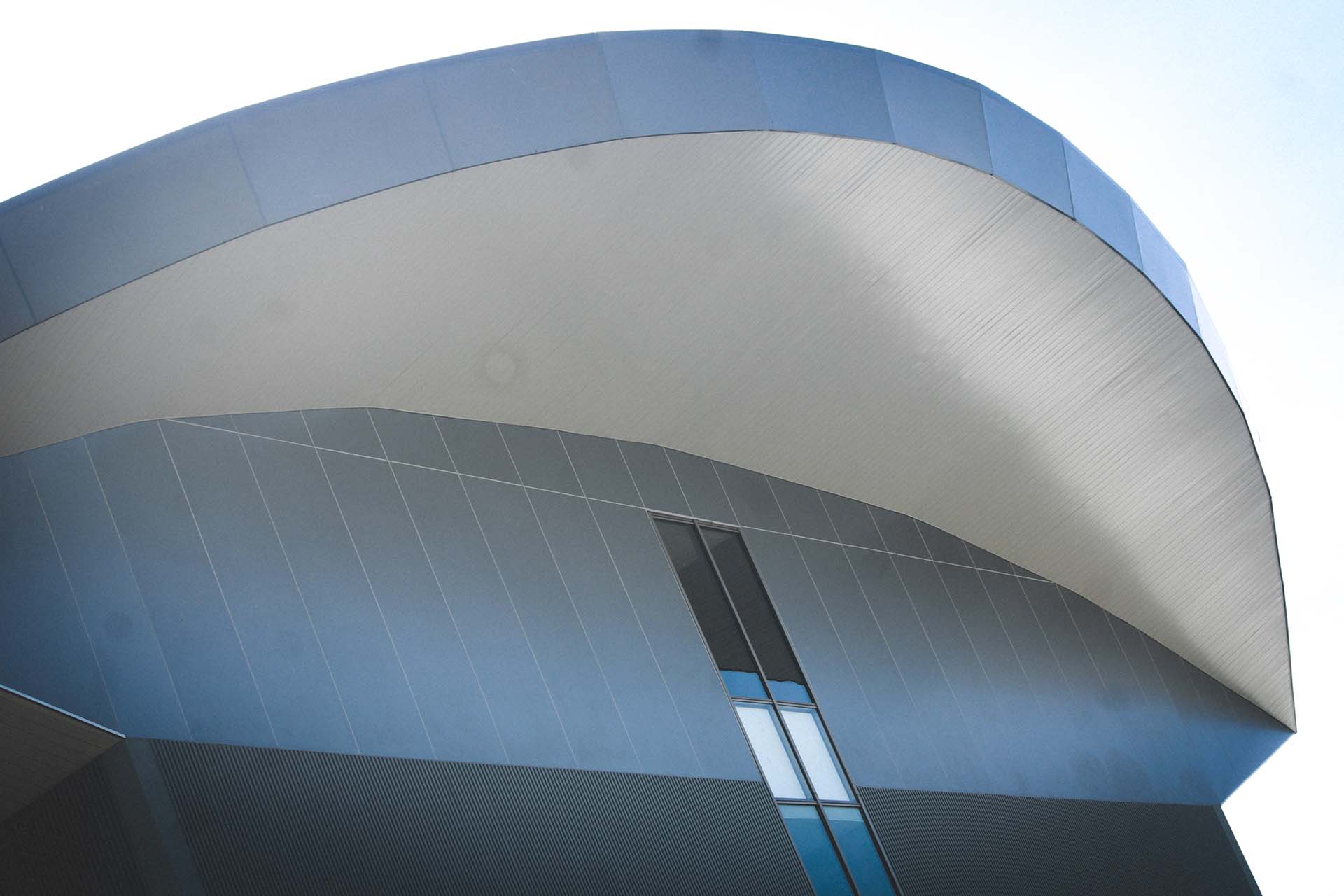
It's a beautiful image, but drums are round and the terminal design required sleek curves in its extensive soffits. The new building design featured long curved tapered soffits at each end of the terminal with sloping soffits along each side. The architects also specified that the soffits be made of metal, so their builder, Fletcher Construction Morobe, looked for a specialist to supply the large-scale curved metal design
A search beyond PNG’s borders soon uncovered Ribon, which was able to supply what they needed, when they needed it.
An original solution for a complex build
Ribon creator, owner and director Keith Russell says,
“we quite often have to come up with project-specific solutions and this is the part I really enjoy — using my creative side to provide solutions.”
Ribon’s system is one-of-a-kind. Keith himself designed and patented it. He and his team also often engineer bespoke solutions created off the original design. During building, the customised Ribon framing was suspended from the steel roof structure eaves to form the curved soffits at each end. These curved sections had a 55m radius, spanning 36m from end to end. The new 3m bracket was a great success and connected together to form the radius.
Team-players make the difference
In the end Ribon was awarded the business, not only for the excellence of its design, but also because the team’s ready communication that made life so much easier for the builders. Ribon’s operators were always quick to respond to every request and their attitude didn’t go unnoticed.
Fletcher’s project manager commented,
“the project was successful because of your (Ribon’s) contribution… You were one of the suppliers that fully co-operated. I hope you will keep up with the good work.”
Streamlined installation saves time
Unlike traditional soffits—which usually require different materials and multiple tradespersons—the Ribon system combines the framing and panels into one powder-coated steel product. First the framework is installed, then the lightweight panels are slotted into it, clicking into seamless alignment. In building, time saved is money saved: The frame created for the curved soffit was made offsite and sent in, where it was relatively quick and easy to install. The cost saving on time in large jobs like this is hard to estimate, but is certainly considerable.
Lightweight design packs architectural punch
The system’s extremely lightweight structure (approximately 6.5kg per m²) is a huge advantage in oversized roof overhangs and canopy edges. It allows designers to make grand architectural gestures without adding excess structural load. Using Ribon soffits on Nadzab terminal’s sweeping roofline and broad walkways maintained a crisp, streamlined aesthetic.
With such large amounts of material being used, it doesn’t hurt that steel is the most recyclable material available. Eco-friendly building is almost always a factor in modern architecture and steel can be melted down and reused in an endless cycle, without ever losing integrity of structure.
Built for scale and climate performance
During building, Ribon framing was suspended from the steel roof structure eaves to form the curved soffits at each end and sloping soffits along each side. Approximately 1500m2 of Ribon soffits were used on this part of the main building with another 1500m2 used to form the front canopies at ground level.
The Ribon soffit system is engineered to be durable, which is a crucial factor in a tropical climate like Papua New Guinea’s. The Ribon system also meets code for high wind events that can hit the tropics hard from time to time. In Papua New Guinea, high humidity, frequent rainfall and temperature fluctuations can quickly degrade traditional soffit materials; but Ribon’s pre finished coated steel meant this soffit will be around for the long haul, offering reduced maintenance and providing a consistent visual finish across large surface areas. In a high traffic public environment like an airport, these characteristics help maintain a professional and inviting appearance over time.
On-site installation without compromise
Ribon usually provides an installation service for its soffits and has various agents around New Zealand who can supply and install the systems locally. However, in this case, the installation was executed by the Fletcher construction team. Despite the complexity of the design plans, the Ribon system itself is refreshingly simple to master. Fletcher’s team quickly got the hang of it and the whole installation went down without a hitch.
A world-class gateway for Papua New Guinea
The Nadzab Tomodachi International Airport, which opened in late 2023, isn’t just another airport upgrade—it’s one of Papua New Guinea’s most symbolic and technically ambitious infrastructure projects ever. The new terminal has transformed Lae’s Nadzab Airport into a world class aviation gateway and now positions Lae as a rival to Port Moresby for international connectivity. Quietly present and seamlessly integrated, the Ribon soffit system is a large part of that success, forming a highly functional yet beautiful part of the design.


