

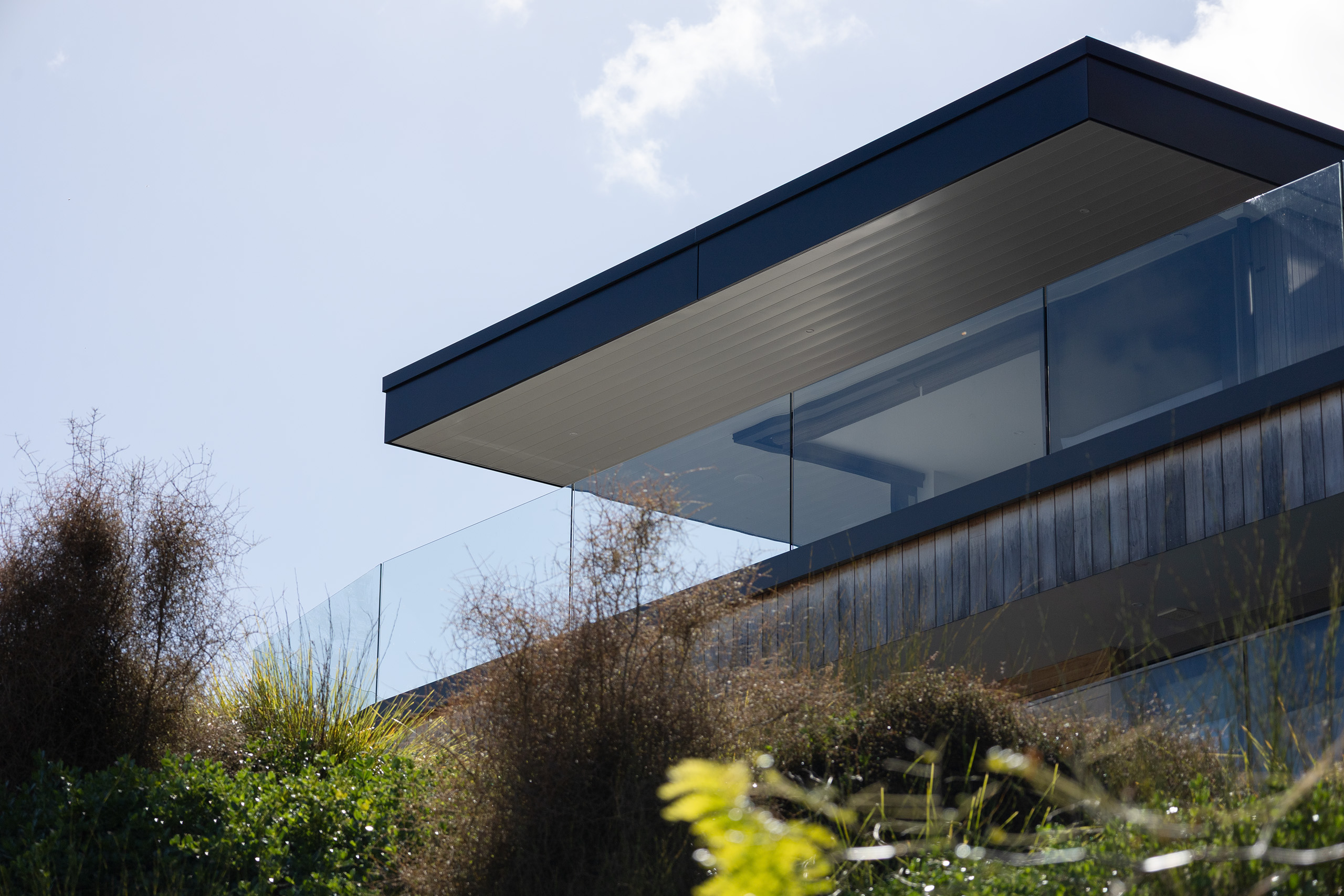

Project Name: Scott’s Landing residential
Project Location: Mahurangi East, Auckland
Contractor/Client: Jordan Construction
Products: Ribon fascia/soffit system, Ribon soffit system
Soffit Colour: Off White
Quantity: 156m2
Project Characteristics: Large eave weight considerations for passive solar heating
Builders opt for local product during shipping delays
Unreliable shipping. Sound familiar? Right now the root cause is a diesel supply issue. In 2020 it was due to the Covid panic. Back then, the builder of a beautiful modern residence on Auckland’s Mahurangi East had been waiting and waiting for James Hardie to receive the fibre cement needed to install the house’s soffits and complete the build. As time ticked by and costs escalated, it became clear that they were not going to get enough product into New Zealand to meet demand.
Something had to give. The builder needed to keep the project on track so he asked Google to find an alternative product. Google found Ribon and the builder placed the order.
A local solution that exceeded expectations
What had started as a desperate move turned out to be an incredible solution, sourced just down the road in Auckland. Not only were Ribon’s soffits local, but they were the perfect fit for the clean structural aesthetic of the ultra-modern build. Although Ribon was initially chosen for its immediate supply, the system itself delighted both the builder and the client.
The Ribon soffit system is a world-first. Created and patented by Kiwi, Keith Russell, the system consists of a bracket framework built in a male/female interlocking system. The bracket (male) is screwed into the rafters of the roof, then the (female) panels of pre-painted steel are clicked into place. Easy. It must have been a beautiful moment when the builder realised there wouldn’t be any handling of heavy unwieldy sheets of fibre cement on this job. Instead of taking weeks to install with trades like fascia installers, stoppers and painters all coming and going, the Ribon soffits were up in a matter of days with only two installers from one trade required.
If the builder was pleased, the client was over the moon. They selected the colour (even the whites come in a number of different shades) and the soffits were up in next to no time. Beautiful to look at, the system’s ingenious design hid any fixings, leaving a clean, luxurious aesthetic. The system clicked together flawlessly and works like an upside-down roof, so there’s no fear of leaky building syndrome. The client also benefited from the longevity of the product. Ribon soffits are made of colour-coated steel, so they never need to be painted and the ongoing maintenance requirements are a dream; just the occasional squirt with a hose.
The Scott’s Landing eaves included wide overhangs as part of its design to create a passive solar aspect. This would shade the home in the summer months and allow the lower sun of winter to enter the building during the colder months. Adding such large overhangs isn’t simply a matter of cantilevering framework off the building envelope. Specific engineering consideration is required to accommodate the overhang, which typically consists of steel portals integrated into the timber frames. Yes, Ribon was selected for being local, but the two other reasons it was chosen for this project were its ultra-light weight (the frame and panel system is just 7.5kg per m2) which reduced load to the structure, and Ribon’s quick lead times for material and labour delivery (less than two weeks).
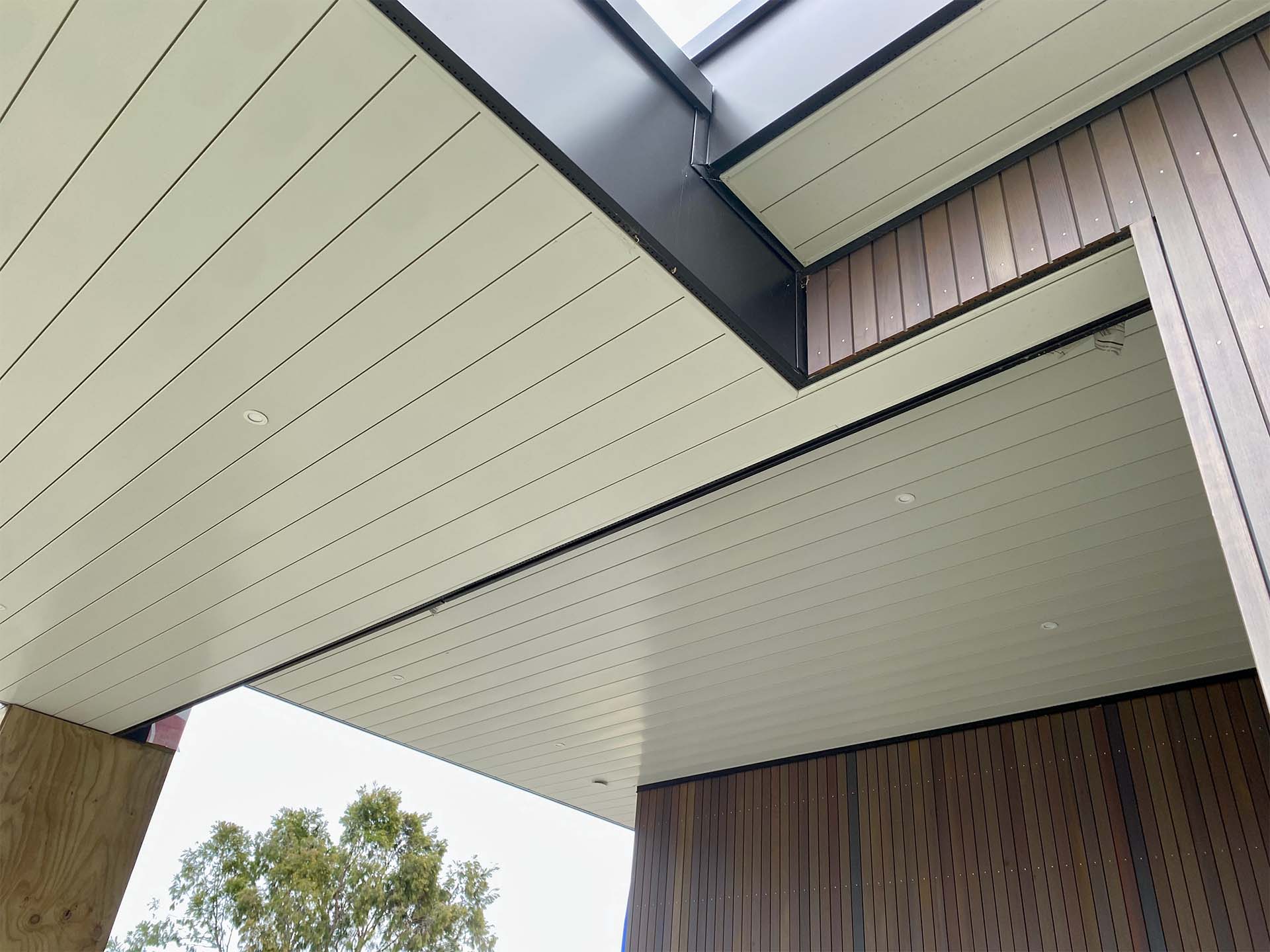
Not just a pretty fascia
As the overhang was a generous one, Ribon’s lightweight system turned out to be an extra benefit to the build. Because Ribon’s steel was so much lighter than the fibre board originally specified, its support system actually helped reduce stress on the roof structure.
Ribon’s solution for the Scott’s Landing build turned out to be a win-win for both builder and client.
NZ products: the solution for rising shipping costs
The Covid panic may be over, but since February, fuel costs have risen between 72% and 109%.
Across the industry, builders are reporting overall overhead increases of up to 20%, driven largely by transport and operational fuel use. Projects in rural and remote areas are facing the greatest pressure, with rising costs contributing to delays and supply challenges. At the same time, the pace of these increases is forcing developers and contractors to revisit contract terms and decide who absorbs the additional cost.
The time to look for product solutions in our own backyard has well and truly come.


