

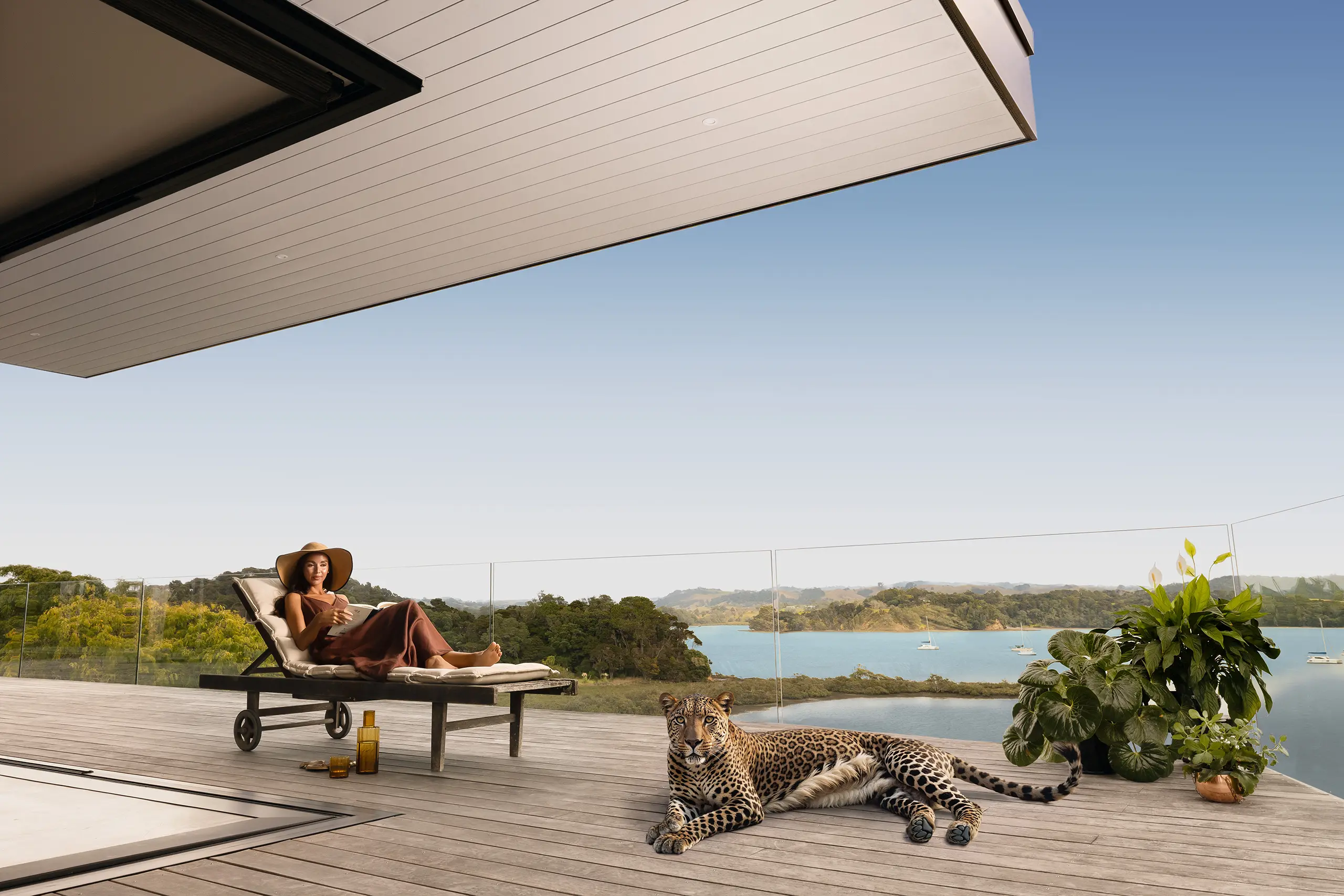

Rethinking the role of soffits
Can a soffit make your heart beat faster? It kind of depends on your heart. And of course, the soffit. In the past, soffit design may have been considered as a bit of an afterthought, but as modern structures soar, beautiful soffits are creating a stir as they step past function into the realm of passion.
The Ribon revolution
In case you hadn’t noticed, Ribon is a pioneer in modern soffits. Rejecting time-consuming and wasteful traditional materials and techniques, Ribon’s founder, Keith Russell, developed a new soffit system using integrated lightweight steel to simplify installation and create a sleek, consistent finish.
Architectural statements in action
Architects are catching on and Ribon soffits are being noticed as features in their own right. At the Grand Chancellor Hotel in Auckland’s CBD, Ribon soffits were used to conceal complex hydraulic systems without compromising ceiling height. In the end, the lightweight Ribon soffit wasn’t just a stunning option, it was the only option; as traditional framing solutions would have been too heavy for the design.

Designing with imagination
In Wellington, the ESR-Kenepuru Science Centre features a distinctive woven soffit style. It’s a striking example of how the system can be used to great creative effect when an architect stops to consider the potential of the material they’re working with.
From function to fantasy
Ribon’s straight pattern in a single colour is a classic. It’s clean and beautiful, and to an architect at the drafting table, it’s a no-brainer. But should they wish to push beyond the first thought, Ribon’s range can spark great creativity. Like keeping the straight pattern and playing with colour variations. Or letting the soffit create texture in a weave. You could even throw away the ruler altogether and allow Ribon to flow along a curve.
Why not take a moment to step outside of strictly functional thinking, into dream mode. Let’s say you’re designing a modern bach. Imagine it’s beach- front. Right on the sand. You could go with the classic clean straight soffit style that most people would immediately think of, or…you could step out of the boat with colour… in an ombre effect. Imagine drawing the colour of the sand into the house and then steadily lightening the effect as it moves towards the interior. The outer soffit might be pebble, the next desert sand, then smooth cream, titania and then finally off white. Outstanding.
Perhaps you’re been asked to dream of a design for a school or a government building. A clever mix of colour and woven patterns in your soffit could invoke the feeling of a modern wharenui (Maori meeting house). You could even bring the soffit inside the building and continue it down the wall.
When you start to see a soffit as more than functional, that’s when it becomes your canvas. That’s when the magic happens.
With Ribon, maybe the question isn’t just whether a soffit can make your heart beat faster, but how far your imagination will let it go.


